When organisations talk about their environmental efforts, audiences are listening closely. However, a growing number of people no longer believe what they hear. As companies and institutions rush to share their sustainability milestones, the line between genuine action and misleading narratives has become increasingly blurred. This dynamic creates a significant hurdle for achieving real environmental progress.
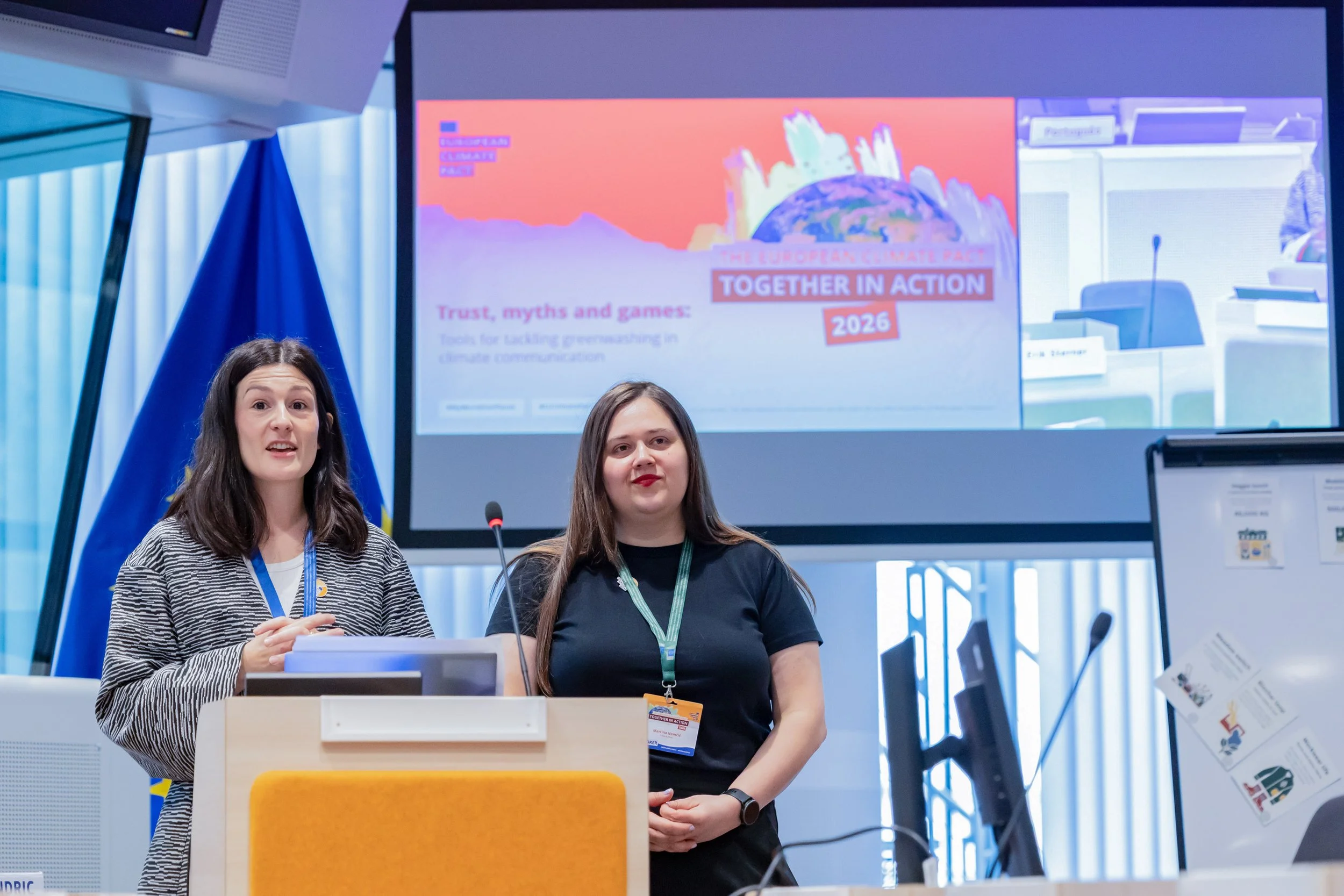
Photo: European Climate Pact
At the European Climate Pact Annual Event: Together in Action 2026, held in Brussels from 23 to 25 March, this exact challenge was discussed. Inside the European Commission’s Charlemagne building, Croatian EU Climate Pact Ambassador Karla Andrić designed and led an interactive workshop titled “Trust, myths and games: Tools for tackling greenwashing in climate communication”. The workshop opened up a critical space to unpack one of the most pressing challenges facing the environmental movement today. The core issue is no longer just the spread of misinformation. It is the widespread erosion of trust among the general public.
Common Greenwashing Tactics
Two specific practices stand out in contemporary messaging: greenlighting, which highlights a single positive action to intentionally distract from larger, systemic environmental impacts caused by an organisation and greenshifting, which shifts responsibility for climate action onto individuals and consumers rather than holding institutions accountable.
These practices are not always intentional. However, they consistently contribute to a growing disconnect between public communication and actual environmental reality.
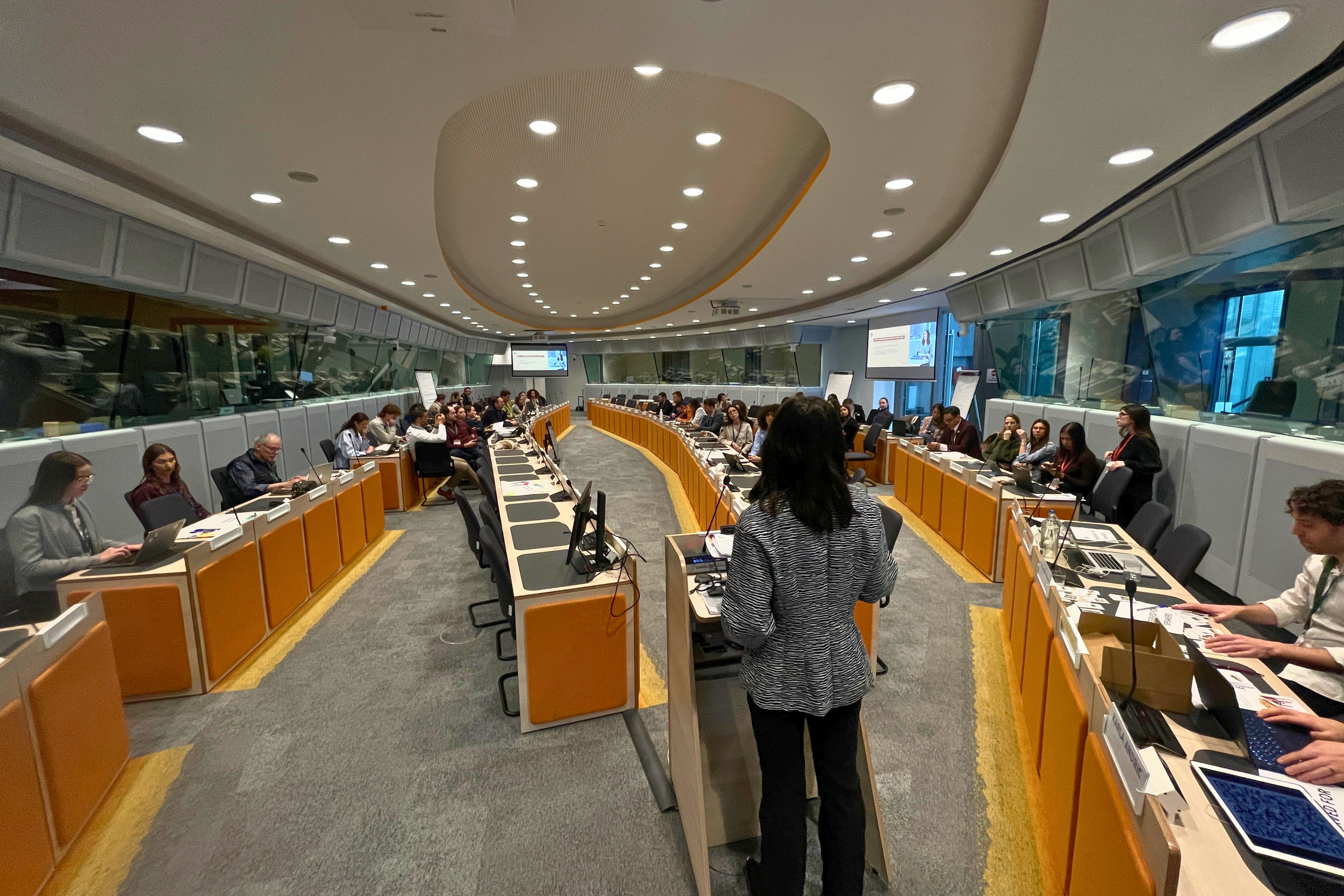
Photo: Door, Country Coordinator of EU Climate Pact
The Real Consequence: A Loss of Trust
One of the strongest insights gathered from both the workshop discussions and participant feedback is that greenwashing has evolved into a fundamental trust problem. When audiences feel misled, they begin to doubt all environmental claims. Feedback from the session revealed alarming statistics regarding public perception.
49% of people question climate communication due to missing evidence or the presentation of selective information
Participants noted that greenwashing is most commonly encountered on product packaging (91%) and in marketing campaigns (69%)
Influencers (84%) and the media (65%) are widely seen as major, but unintentional contributors to the problem
This highlights a deeply systemic issue. Misleading environmental communication is not limited to a few bad corporate actors. It is reinforced across the entire information ecosystem. The consequence is significant because when trust is lost, even credible and evidence-based communication becomes questionable.
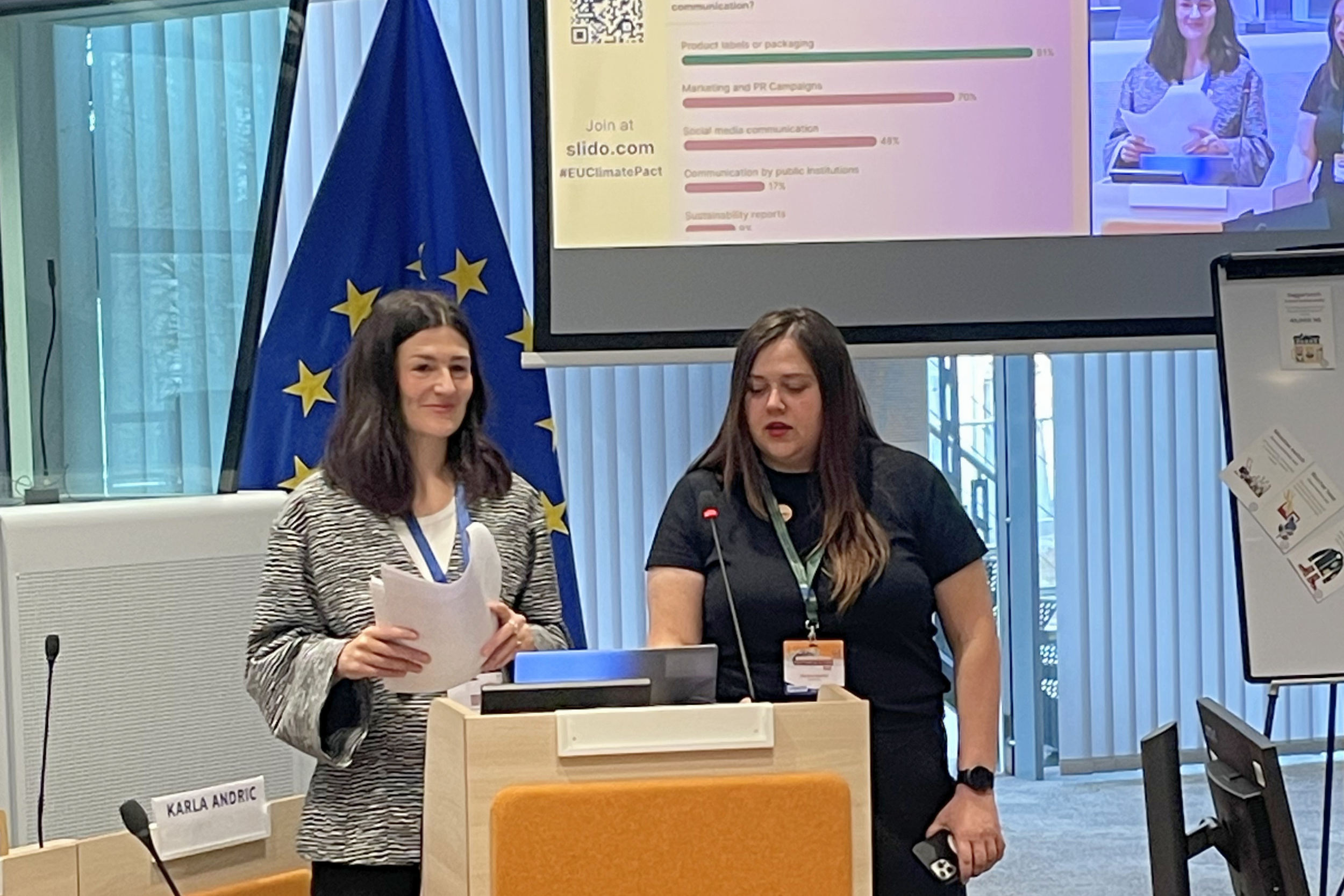
Photo: Door, Country Coordinator of EU Climate Pact
When Positive Stories Become Misleading
Even initiatives that sound entirely beneficial can fall into the greenwashing trap. One of the primary examples explored during the workshop focused on Croatian tree-planting initiatives. Planting trees is objectively beneficial for the environment. However, when a company presents it as their primary climate solution, it can create a highly misleading perception of their overall impact. Typical communication patterns for these initiatives include:
Emphasising the sheer number of trees planted
Using strong, vibrant visuals to signal environmental stewardship
Self-issued labels and internal metrics
Building a Trust and Transparency Toolkit
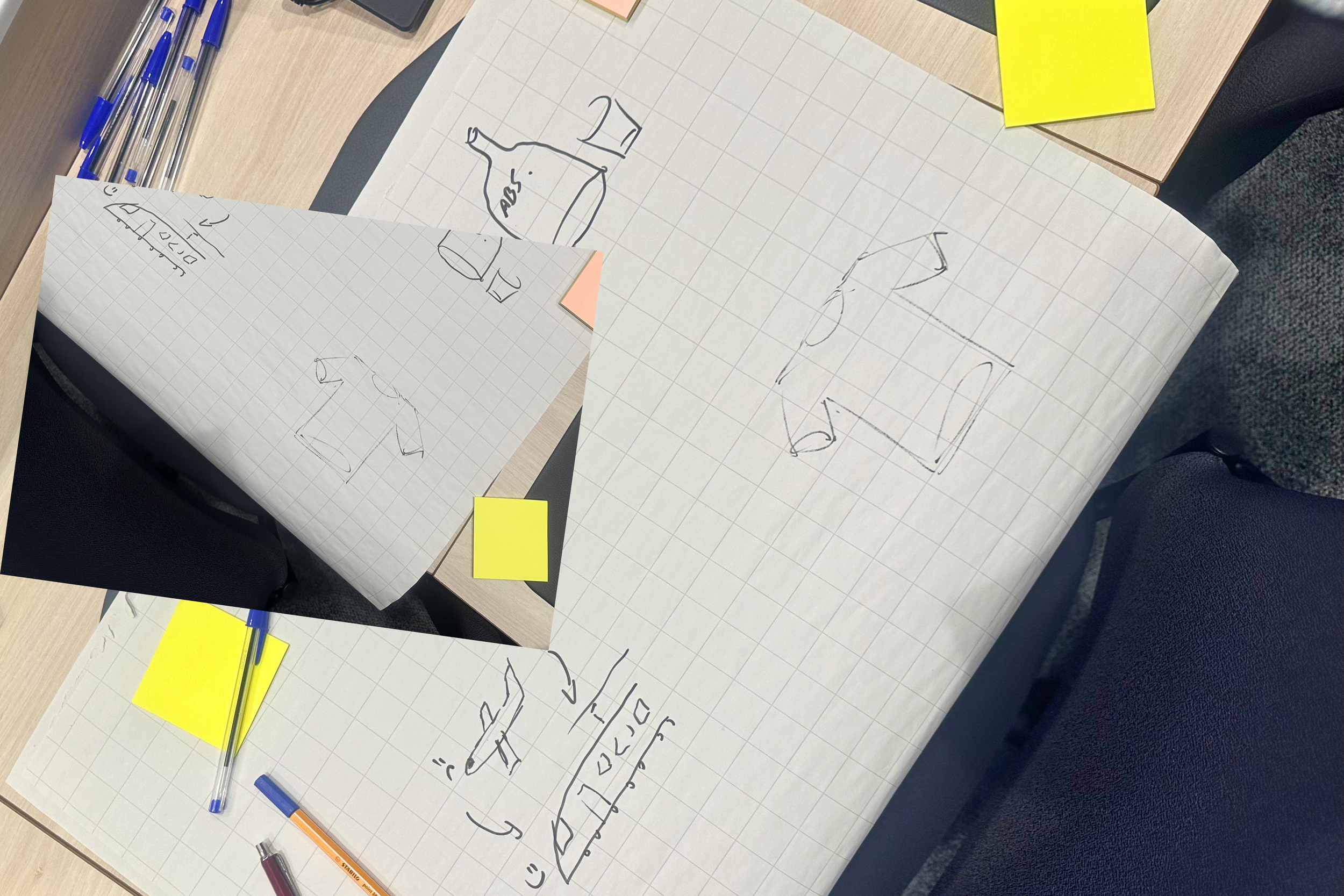
The workshop, led by Karla Andrić and moderated by Martina Nemčić, was both theoretical and highly practical, focusing on actionable solutions. Participants worked in groups to analyse real-world examples of brand messaging from three different angles: a project, a press release, and a digital ad.
This collaborative process formed the foundation for a Trust & Transparency Toolkit, which will serve as a set of shared principles designed to guide more honest and evidence-based climate communication. The framework will be further developed and eventually shared with all attendees to help them implement better practices in their respective fields.
According to feedback collected by the organisers, the session was highly successful. They rated the key message clarity as "Clear" and the structure and flow as "Well-structured." Participant engagement was noted as "Very engaging," with a good level of interaction and a strong diversity of perspectives. Overall, the session was perceived as well-organised and highly relevant, generating meaningful discussion.