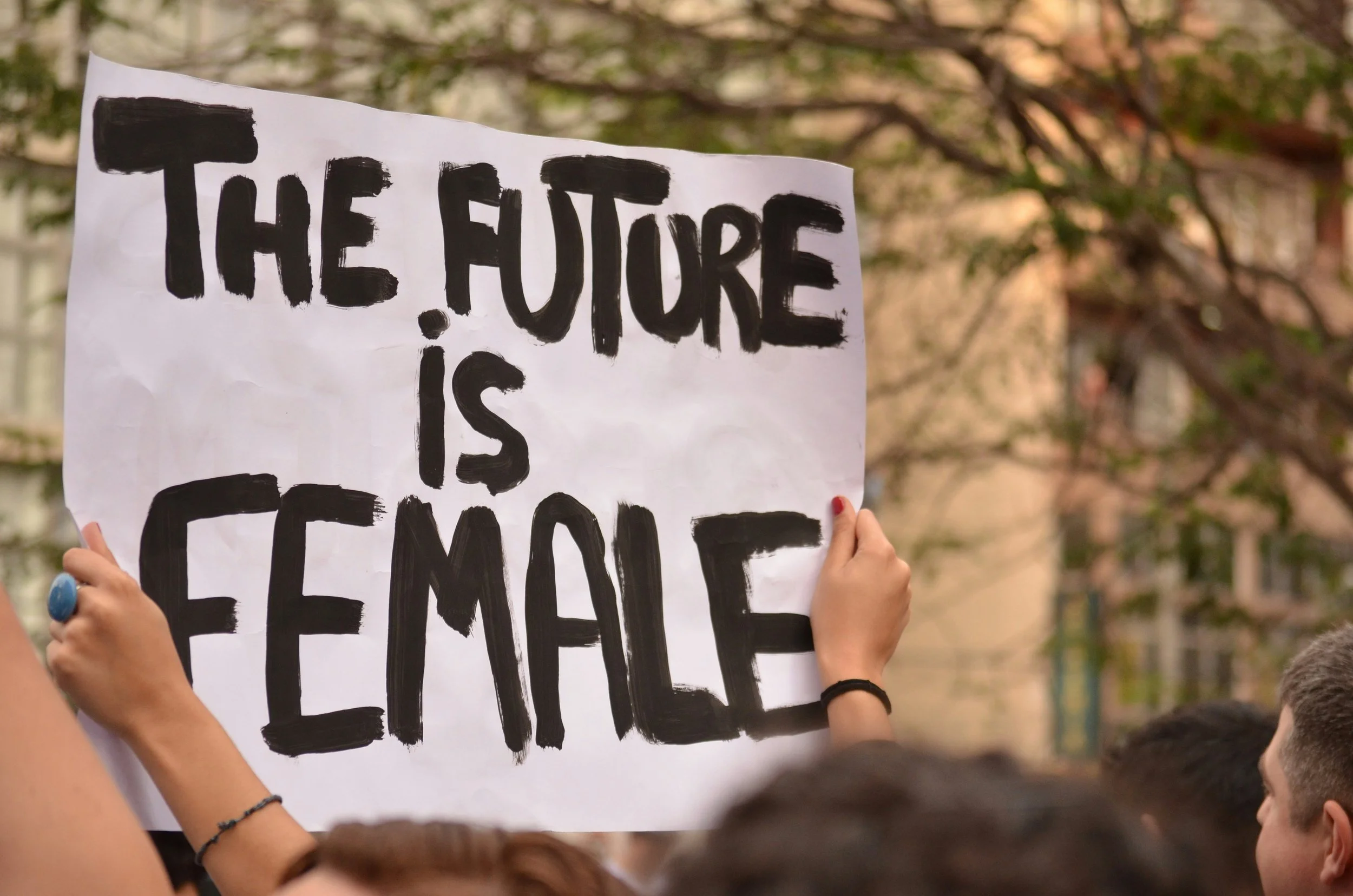
As climate change accelerates, questions of climate justice and gender inequality are no longer abstract or distant, they are becoming part of everyday political and social conversations. From energy poverty to migration and labour conditions, it is clear that the climate crisis does not affect everyone equally.
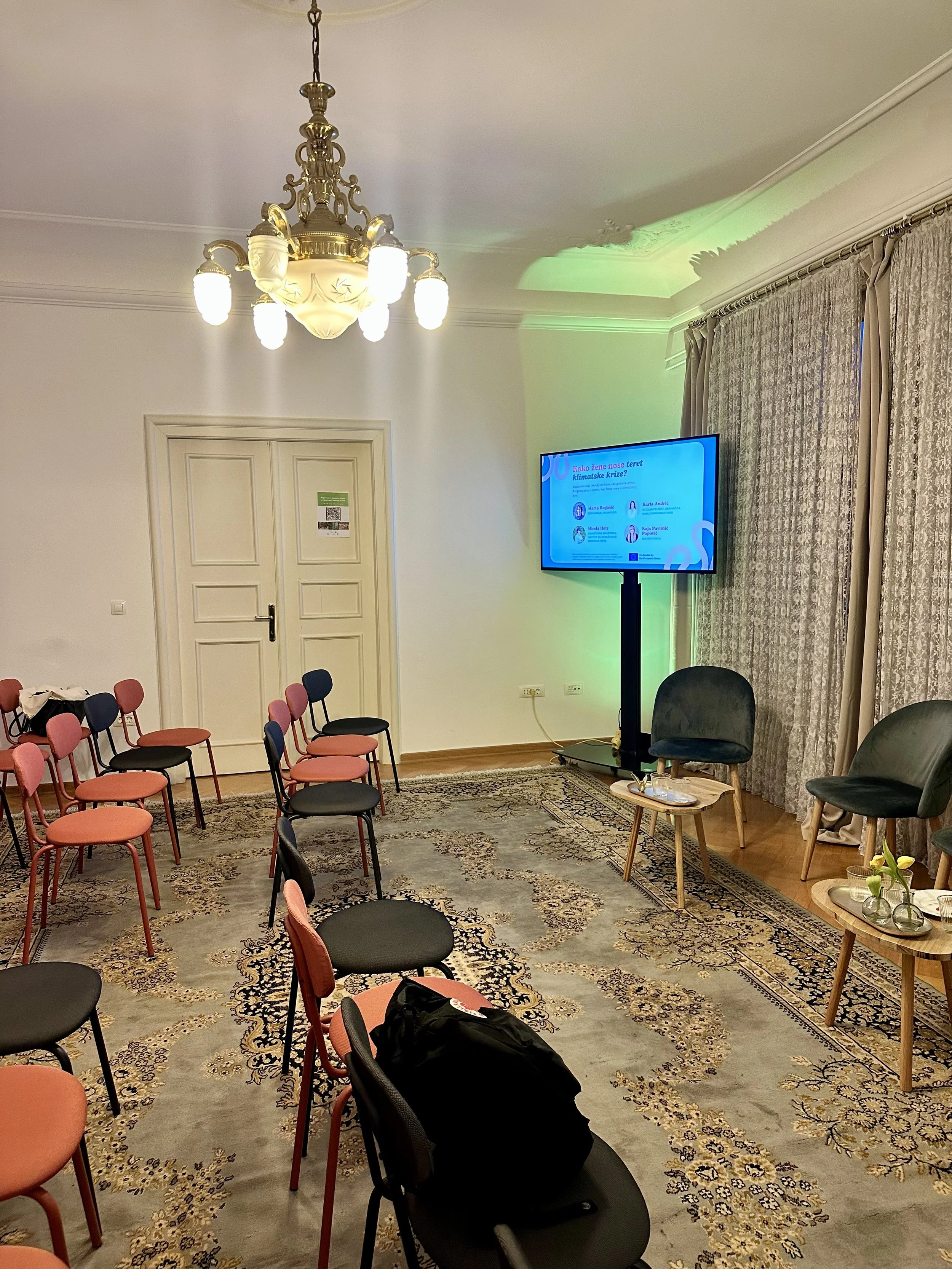
These questions were at the centre of a panel discussion held in Zagreb as part of the project The Earth Is Female, organised by the Forum for Sustainable Development – Green Windowin collaboration with theForum for Freedom in Education.
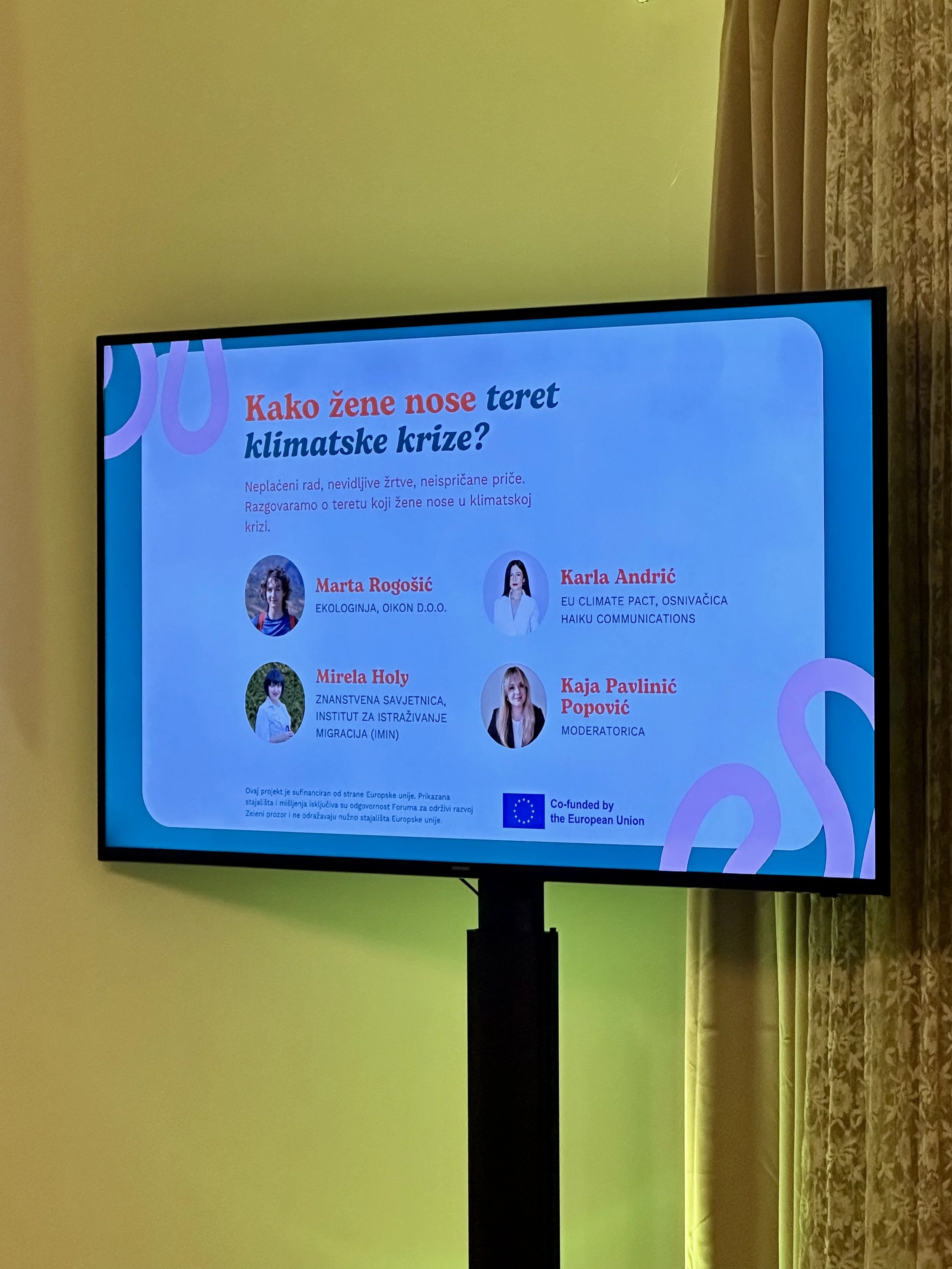
The panel, How Do Women Carry the Burden of the Climate Crisis? brought together Karla Andrić, European Climate Pact Ambassador and founder of Haiku Communications, Marta Rogošić, environmental expert at OIKON, and Mirela Holy, senior research associate at the Institute for Migration Research, moderated by Kaja Pavlinić Popović.
Climate Crisis Is Not Gender-Neutral
What made the conversation particularly compelling was the way different perspectives overlapped. Environmental expertise was constantly in dialogue with social and political analysis, reminding us that the climate crisis cannot be separated from the structures that shape inequality in the first place.
The panel addressed ecofeminism as a framework for understanding the link between the climate crisis, gender inequality, and environmental justice, particularly in relation to women's experiences and lived realities.
Mirela Holy referred to United Nations data showing that 80% of people displaced by climate change are women, who face greater risks and slower recovery due to existing social and economic inequalities, particularly in the Global South. Displacement and instability also tend to increase gender-based violence, while women are disproportionately represented in lower-paid and less secure jobs, all of which makes recovery slower and more difficult.
Who Holds Power?
Questions of power ran persistently throughout the discussion. Who gets to make the decisions?
Drawing from her professional experience, Marta Rogošić pointed to ongoing structural imbalances in both scientific and technical fields. Even in climate and energy sectors that are central to the green transition, leadership positions remain largely male-dominated, while women's expertise is often underestimated or framed as less "technical."
Karla Andrić approached power from a different angle, through communication.
Power does not operate only through institutions but also through narratives. Whose voices are amplified, and whose are missing? And when companies talk about sustainability, are they genuinely engaging or simply following a trend?
She emphasised the importance of informed and responsible engagement at both the individual and institutional levels. In that sense, education, curiosity, and reliable information become especially important for women, who are still too often pushed to the margins of decision-making processes.
Ecofeminism: A Necessary but Nuanced Framework
While ecofeminism has played an important role in bringing feminist perspectives into broader public discourse, Mirela Holy cautioned against essentialist interpretations, particularly the idea that women are inherently closer to nature, more emotional, or more caring. Such assumptions, although often framed positively, risk reinforcing gender stereotypes. Instead, the discussion pointed to the need for a more nuanced understanding that recognises differences within groups and avoids generalisations.
Why This Conversation Matters Now
As the panel made clear, climate justice and climate policy cannot be separated from questions of gender, power, and inequality. Addressing the climate crisis requires us to consider who is disproportionately affected, who participates in decision-making processes, and whose perspectives remain underrepresented.
The discussion highlighted the importance of informed engagement and inclusive climate conversations. Climate action is not only about policies and targets but also about asking better questions, challenging existing structures, and creating space for more equitable and sustainable solutions.
Author: Anja Tomljenović, Haiku Communications Contributor